What is ABA?
Science-backed strategies that turn everyday moments into lasting skills.
Applied Behavior Analysis (ABA) is a systematic approach to improving socially important behavior by first pinpointing the environmental factors that influence it. ABA then encourages desired actions and discourages those that get in the way, so people can build a wide range of skills
Put another way, ABA applies what we know about how behavior works to real-life situations—raising behaviors that help and reducing those that hinder learning or everyday living
Behavior Has A Cause
Every action meets a need—attention, escape, access to an item, or sensory relief.
Progress is measured
Data from each session tells the team what to keep, tweak, or drop.
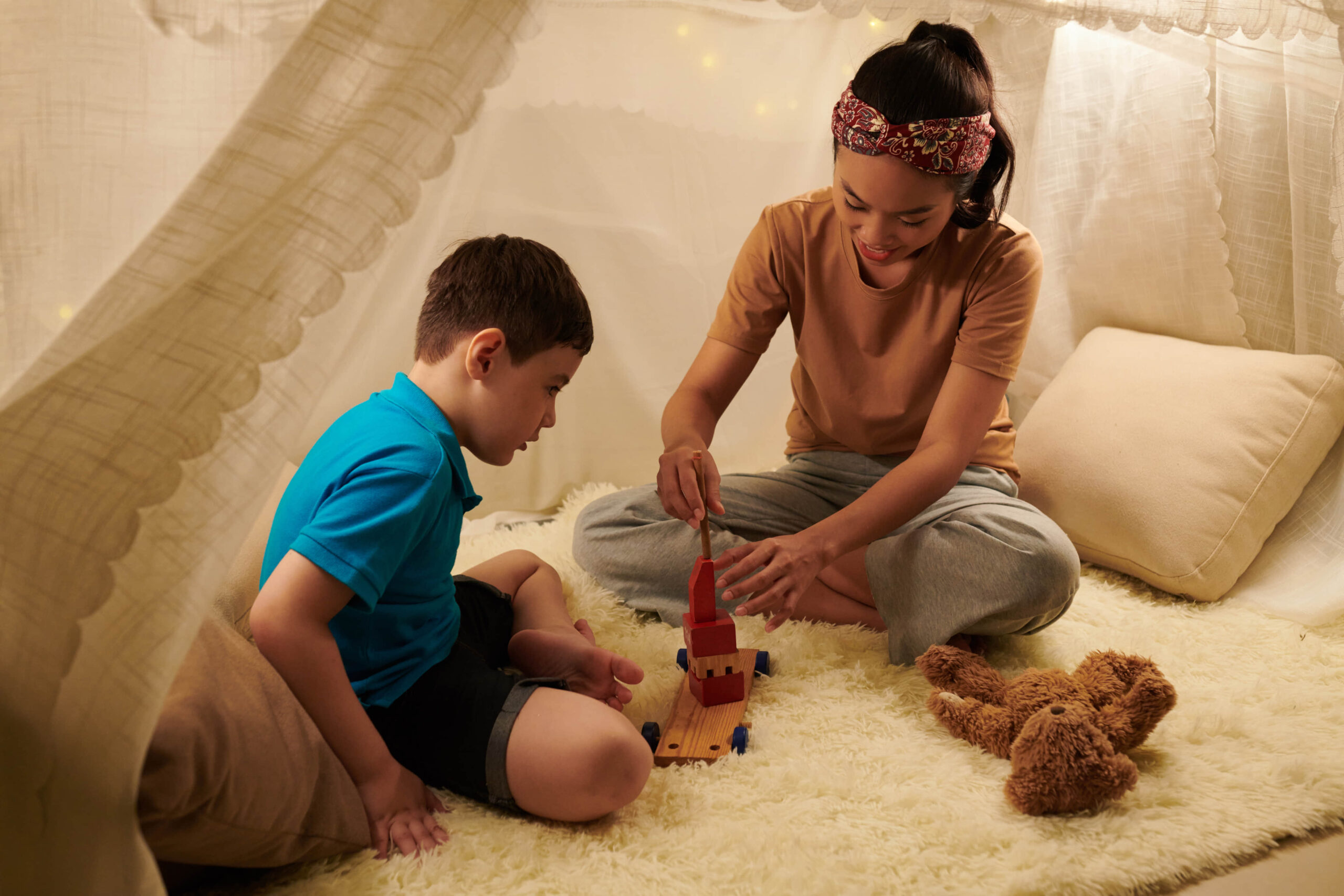
Learning happens in real settings.
Homes, classrooms, clinics, and playgrounds all become practice fields for the same targets.
Common Goals ABA Therapy Can Target
Communication
- Verbal language
- Non-verbal communication
- Social conversation
- Requesting needs
Social Skills
- Peer interaction
- Turn-taking
- Sharing
- Group participation
Self-Care
- Toileting
- Dressing
- Eating independently
- Personal hygiene
Academic
- Pre-academic skills
- Staying on Task
- Turn Taking
- Transitions
Play & Leisure
- Independent play
- Interactive play
- Following game rules
- Recreational activities
Adaptive
- Safety awareness
- Following instructions
- Problem-solving
- Independence
What a Typical Session Looks Like
Engaging, structured, and designed to keep your child moving forward.
Focused Teaching
New or challenging skills are broken into bite-size steps and practiced through play, routines, or brief direct instruction.
Everyday Practicality
Down-to-earth strategies blend into daily routines, making therapy feel natural and doable.
Flexible Delivery